| North American Tour of 1895 | 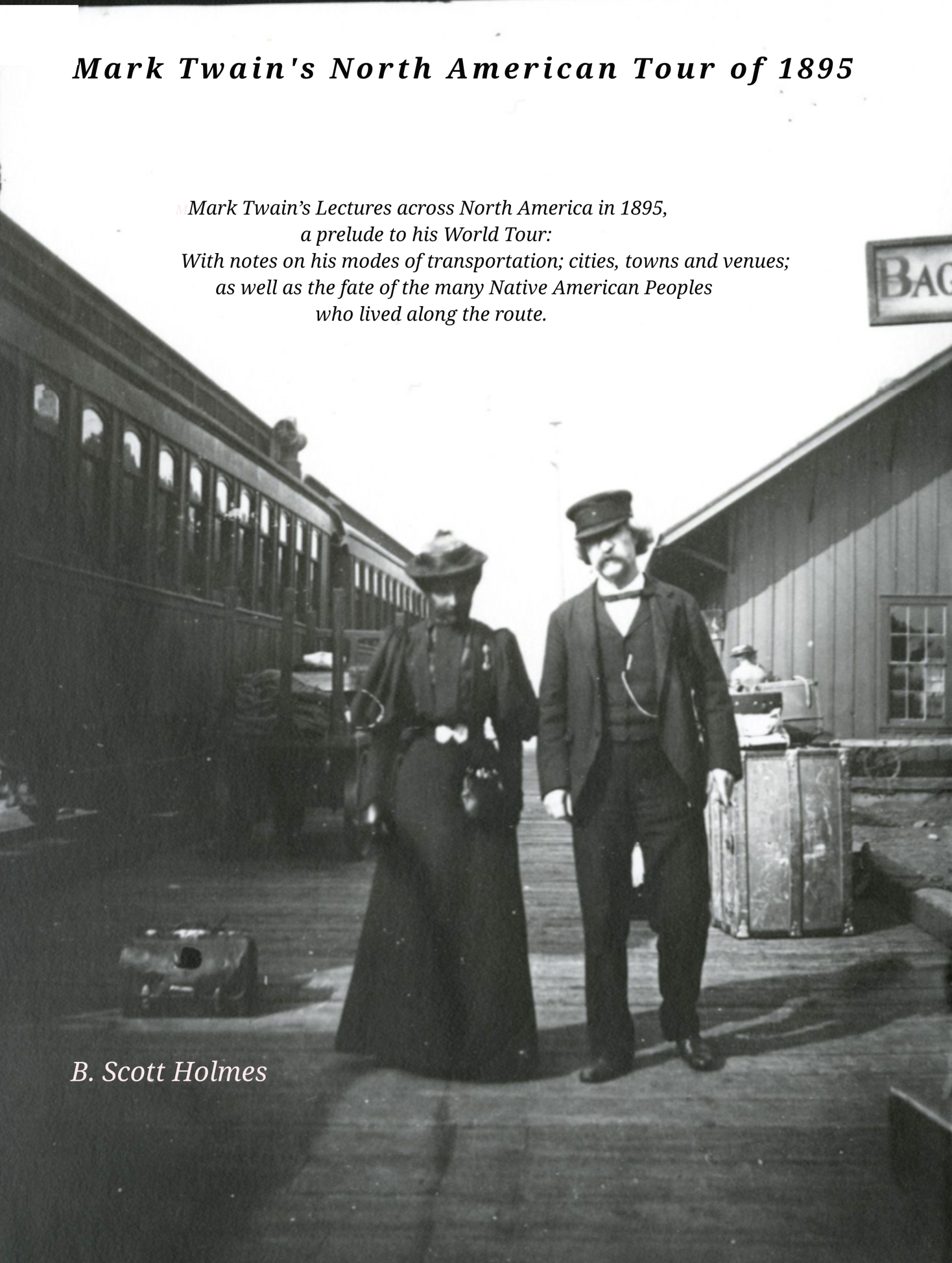
|
Mark Twain, with his wife Livy and daughter Clara, went on an around-the-world lecture tour from May of 1895 to August of 1896. He chronicled to journey in his book "Following the Equator". His book did not include the first leg of this journey, crossing the North American continent to Victoria, British Columbia, where he took ship. This first leg was described in his tour manager's, James B. Pond, chronicle. This publication uses Pond's journal as a basis for describing the cities, towns and villages, the hotels and venues used and the railroads involved in the journey. |
| Overland Trail: 1860-61 | 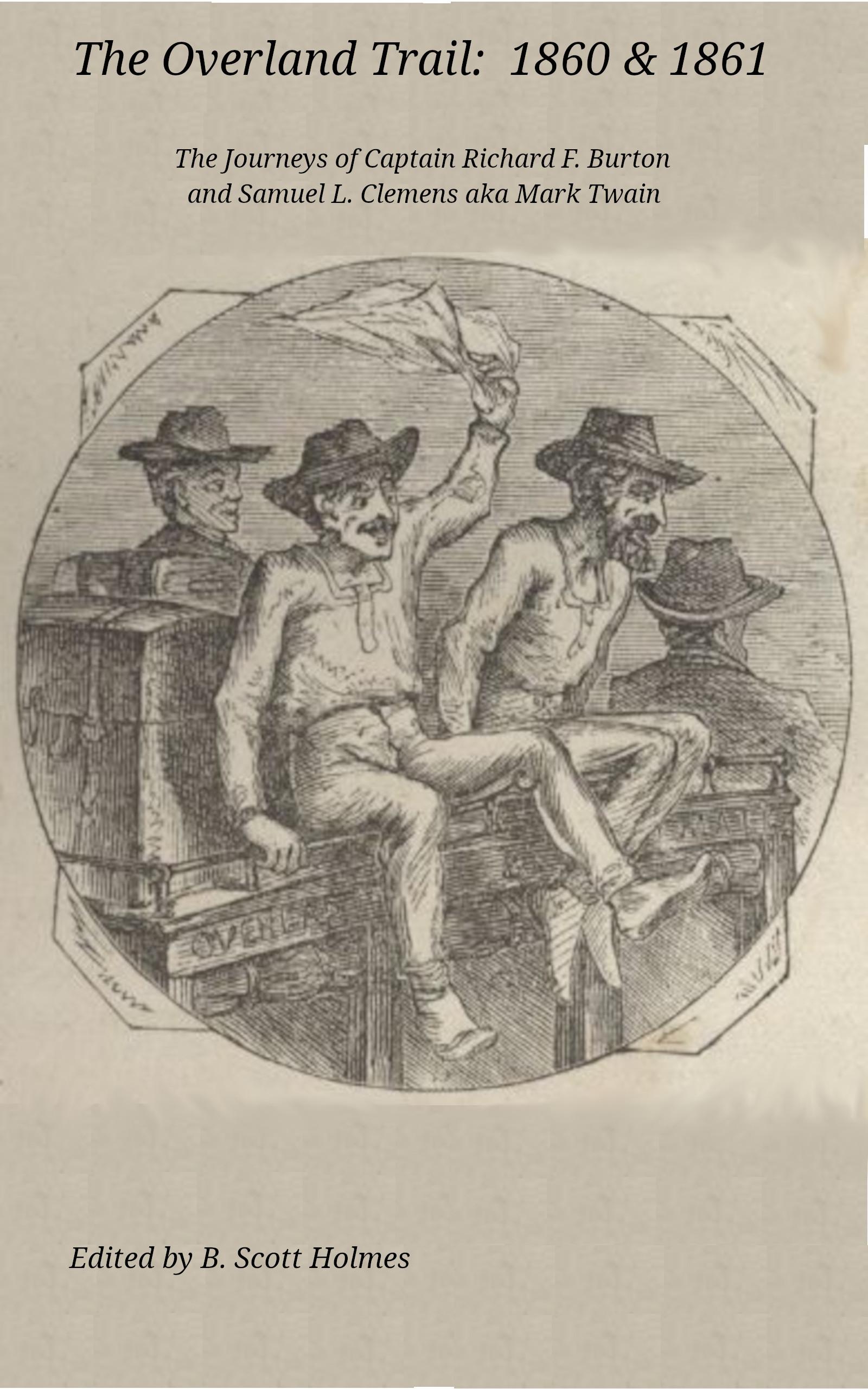
|
In 1861, with the on-set of the Civil War, Sam Clemens gave up his profession as a Mississippi Riverboat Pilot and headed west. His brother, Orion, had been appointed Secretary of the Territory of Nevada by Abraham Lincoln. Sam paid for the journey on the Overland Stage, the same route as used by the Pony Express. Richard F. Burton, in his quest to visit religious centers, decided to see Salt Lake City. He took the same route in 1860. This publication borrows from their respective narratives, Mark Twain's "Roughing It" and Burton's "The City of the Saints". |
| Twain-Cable Tour | 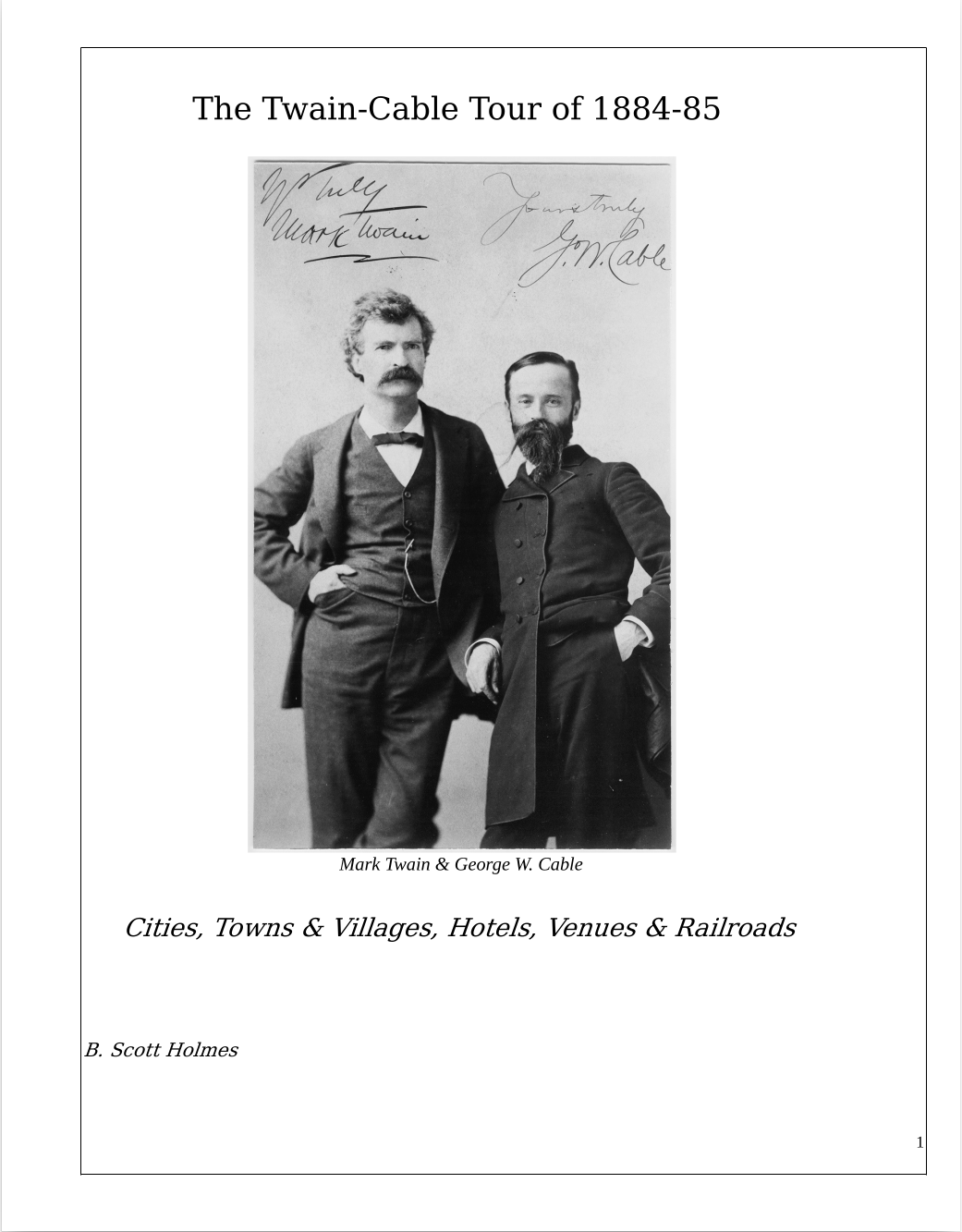
|
Mark Twain and George W. Cable took on a lecture tour from November of 1884 to February of 1885. This publication begins with a narrative of the tour consisting of Twain's correspondence with his wife, Livy and other sources. This narrative contains pointers to information on the cities, towns and villages of the tour; the hotels and venues; and, the railroads used for traveling the route. |
| Mark Twain and A Certain Club | 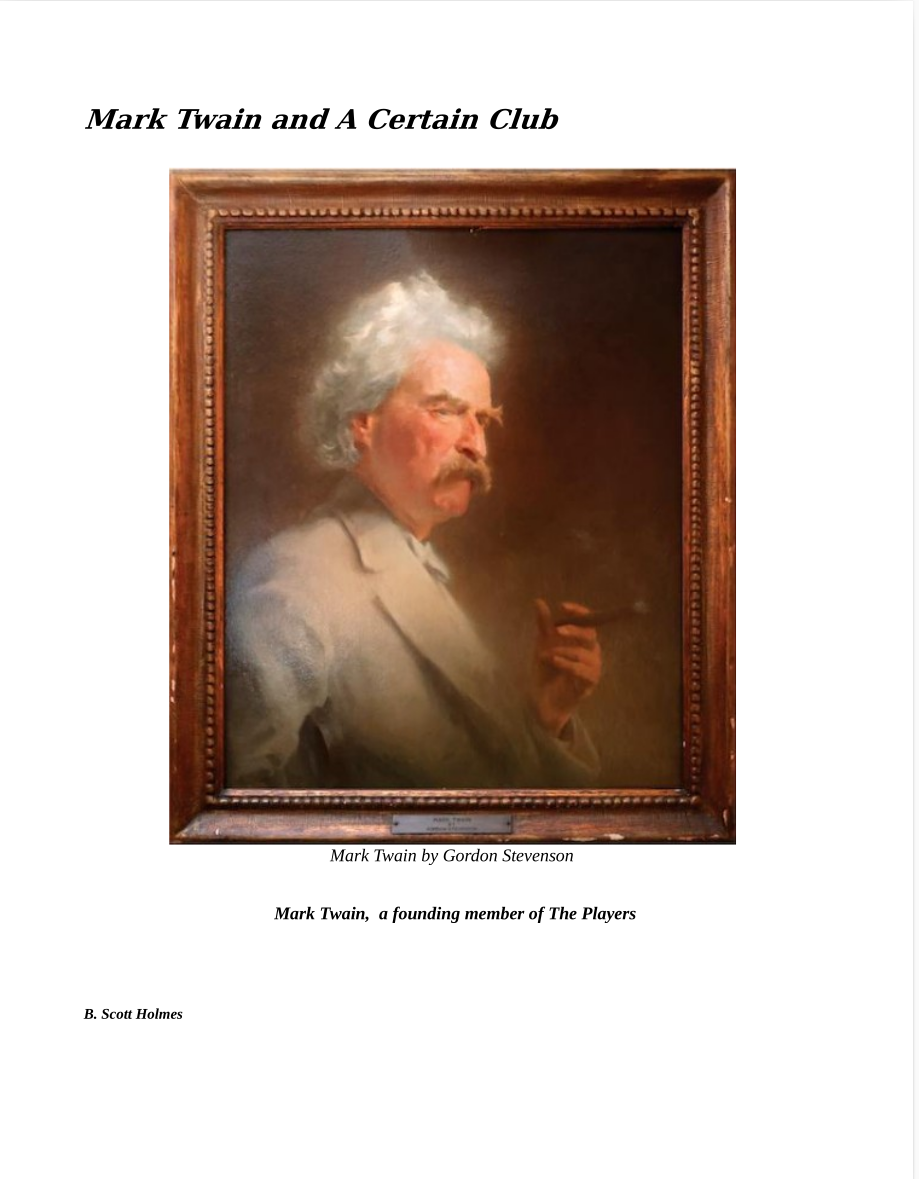
|
“It was the only club I took any interest in or cared to belong to..” Sam Clemens’ involvement with The Players and with members of the club had greater significance in his life than I’ve found mentioned in biographies. The club was there for him in moments of great fame and achievement and in times of great personal tragedy. It provided him with a home when he was separated from his wife and family, during times of financial worries. |
| Mark Twain's Sandwich Islands Tour | 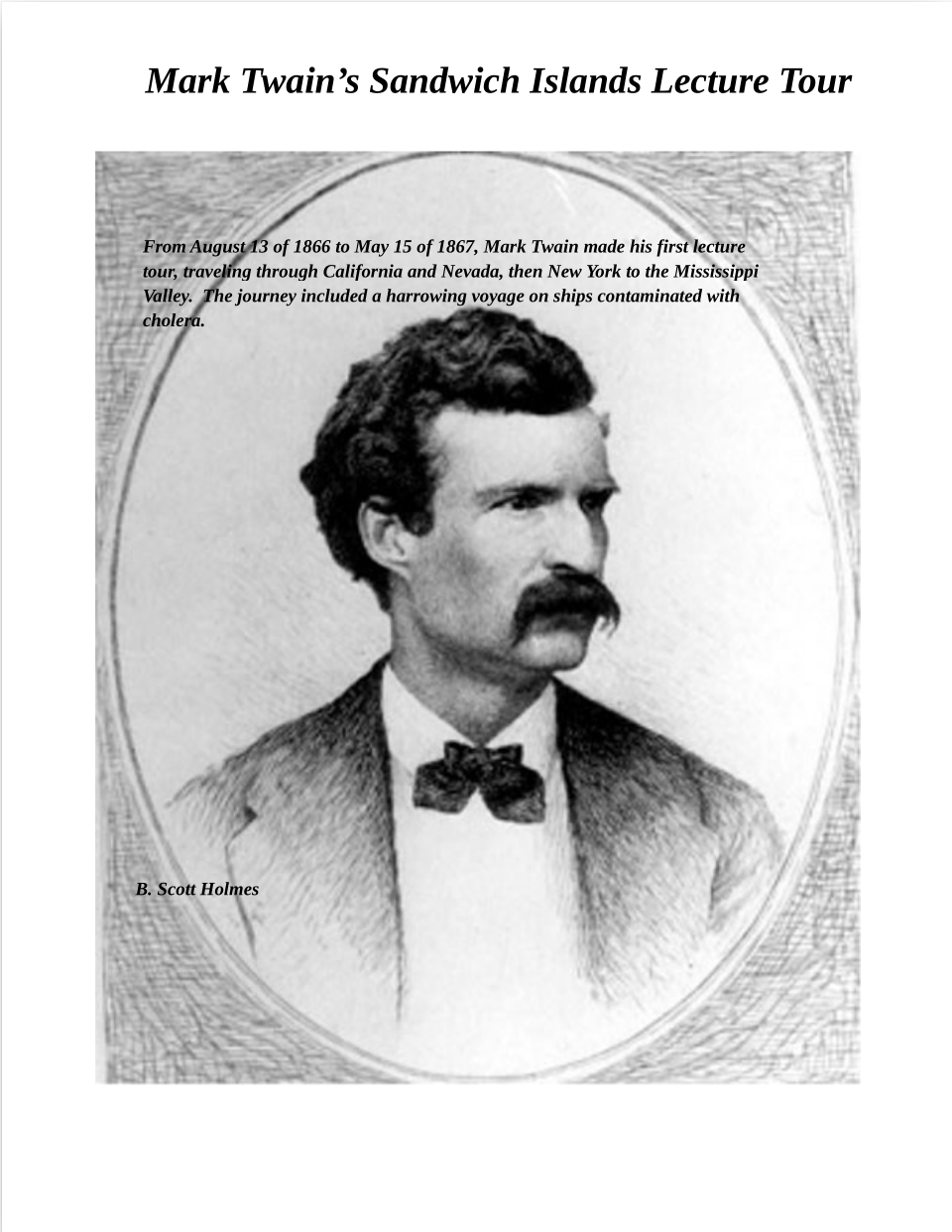
|
From August 13 of 1866 to May 15 of 1867, Mark Twain made his first lecture tour, traveling through California and Nevada, then New York to the Mississippi Valley. The journey included a harrowing voyage on ships contaminated with |
| Twain's Geography: An Introduction | 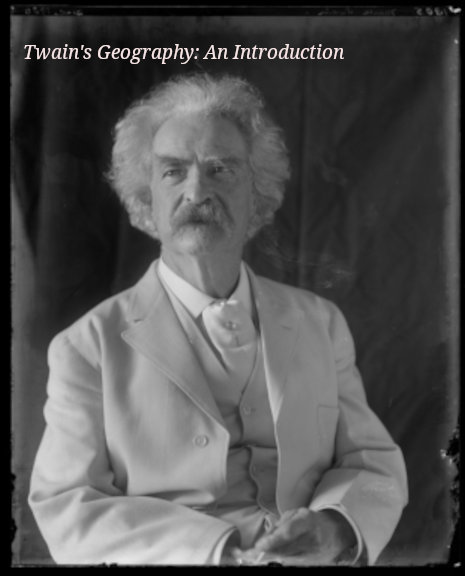
|
A brief synopsis of Mark Twain's life and travels. |
| Mark Twain's Birthplace, Florida, MO | 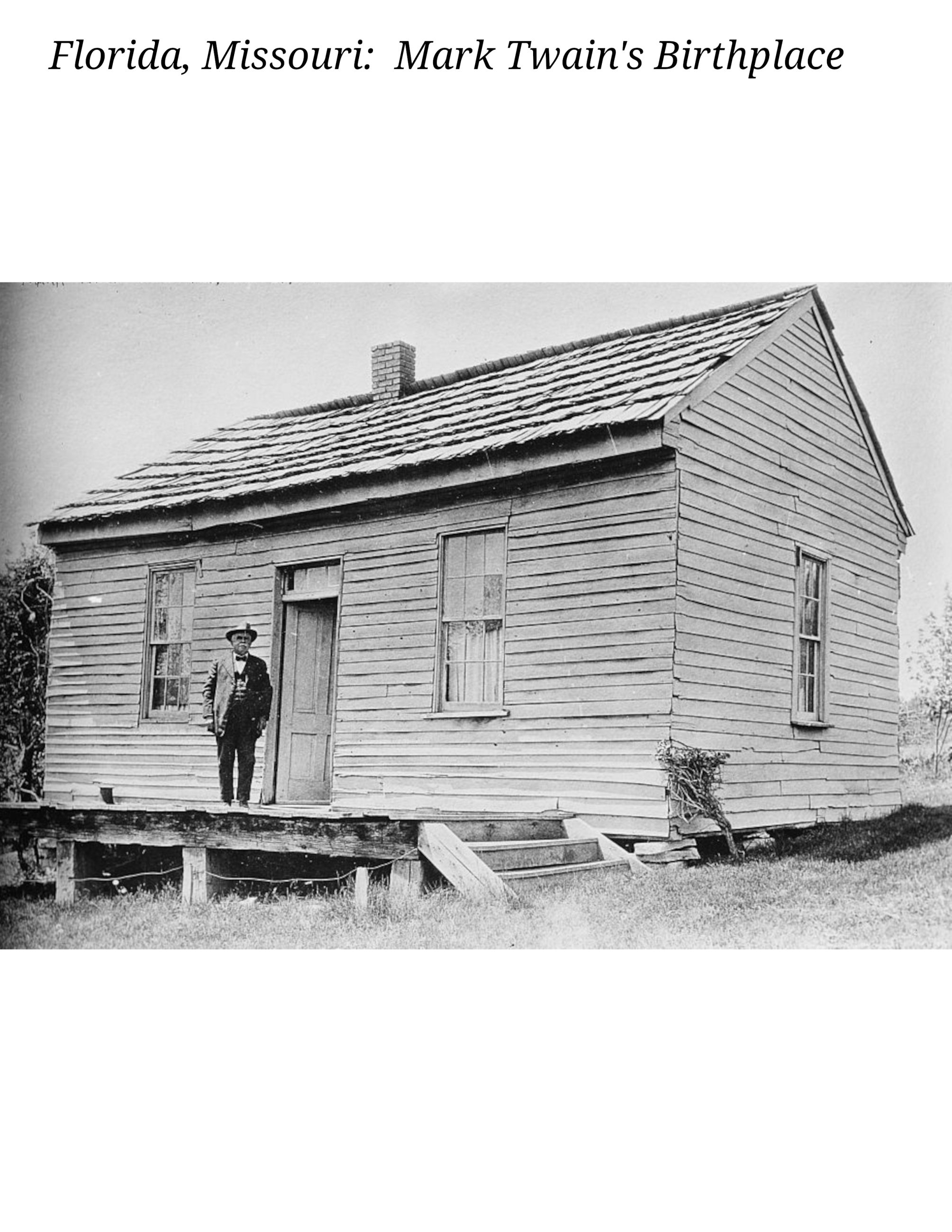
|
I was born the 30th of November, 1835, in the almost invisible village of Florida, Monroe county, Missouri. I suppose Florida had less than three hundred inhabitants. It had two streets, each a couple of hundred yards long; the rest of the avenues mere lanes, with rail fences and corn fields on either side. Both the streets and the lanes were paved with the same material—tough black mud, in wet times, deep dust in dry. (Twain’s Autobiography) |
| Mark Twain's Boyhood Home - Hannibal, MO | 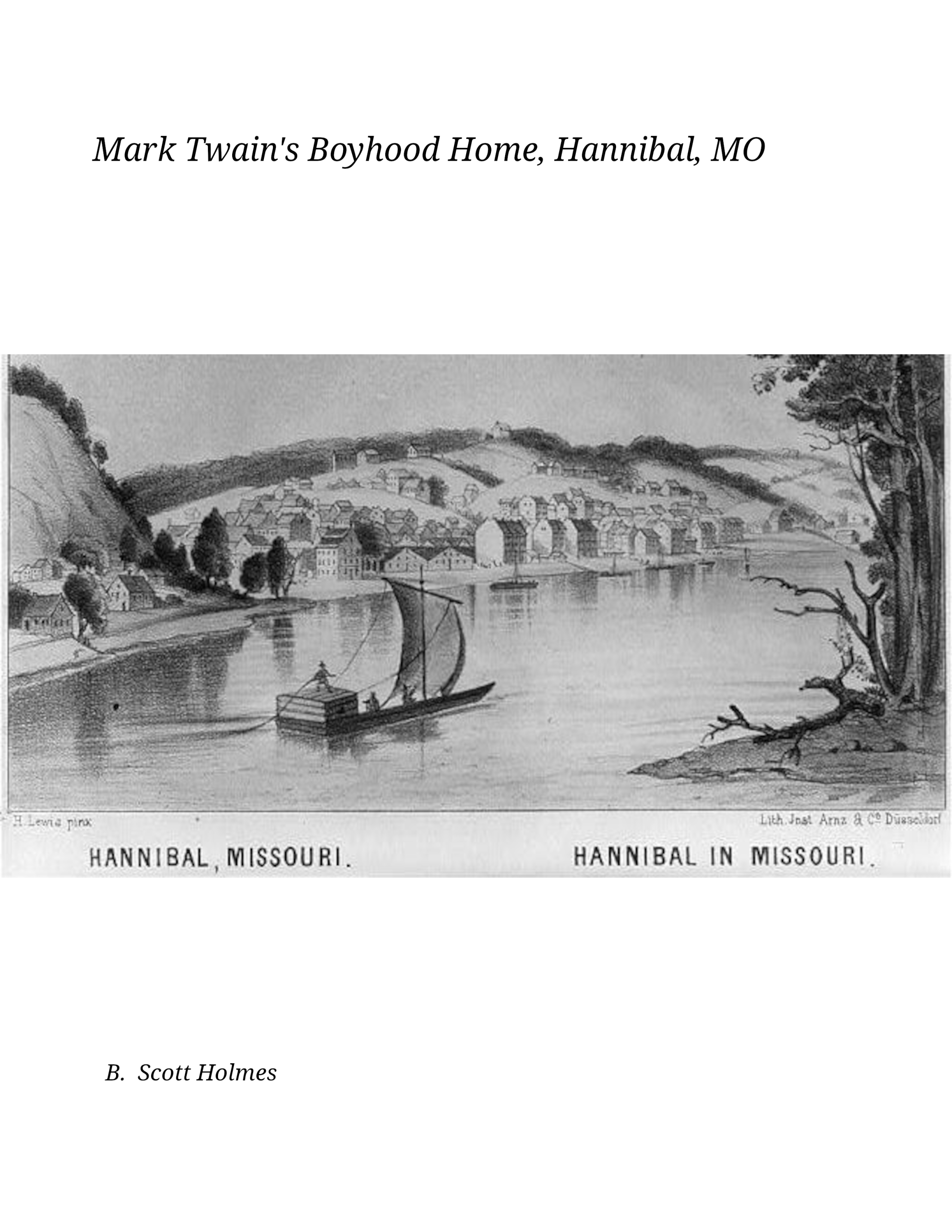
|
Sam never truly left Hannibal—he carried it in his heart and memory and poured it out into The Adventures of Tom Sawyer and Huckleberry Finn. Hannibal in those pages would become a universal boyhood home, an icon like the man himself. Sam would visit again in 1882 to gather material for Life on the Mississippi, and the last time in 1902. In many ways Sam Clemens would always be the boy of Hannibal—his wife Livy would call him “youth.” |
| A Restless Type Setter - Sam Clemens Leaves Home | 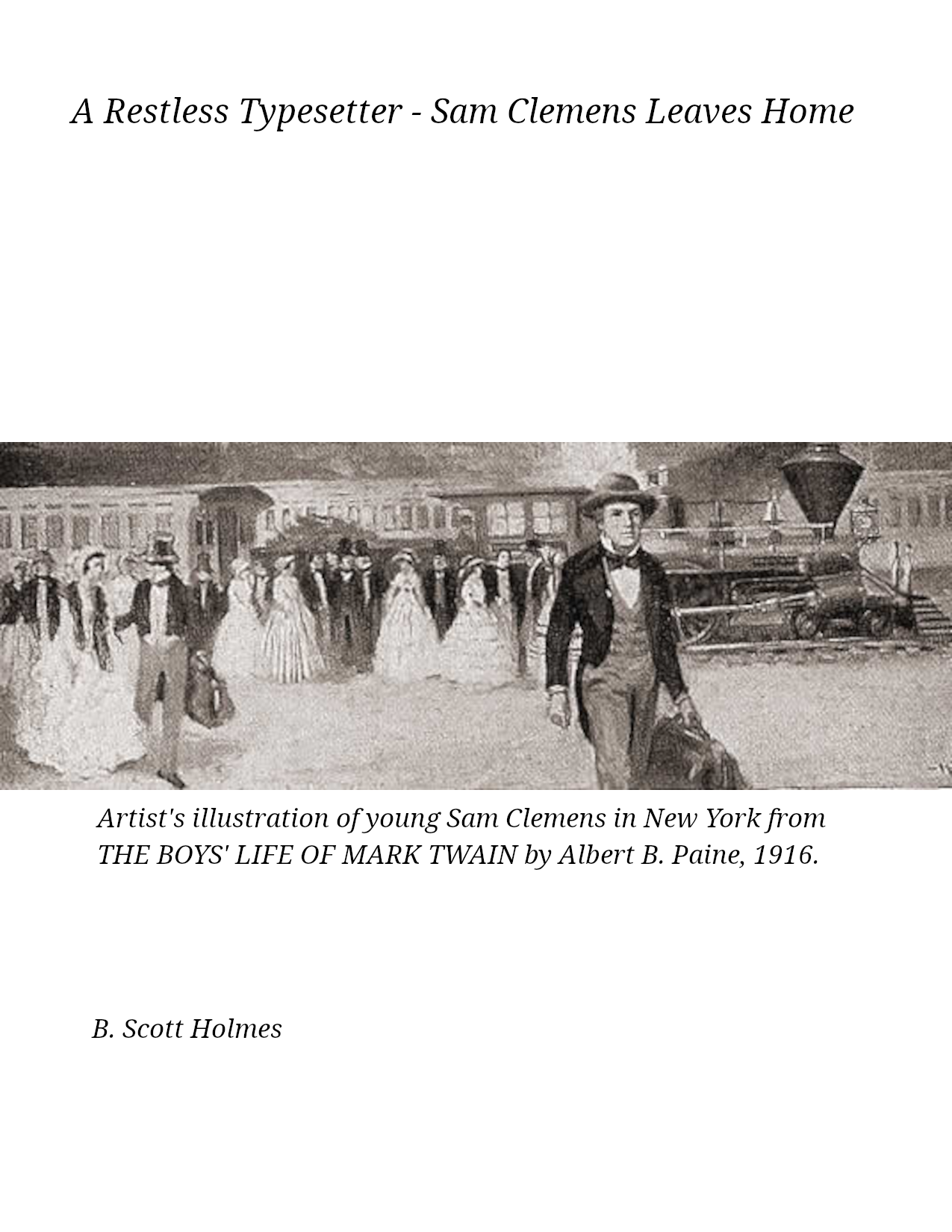
|
Sam Clemens departs his childhood home of Hannibal, Missouri and attempts to support himself as a type setter. His travels take him to New York City, Philadelphia, Washington D.C. then back to Hannibal, Keokuk and Muscatine. He eventually finds his way to Cincinnati, Ohio where a new phase in his life is to begin on the Mississippi River |
| Sam Clemens Starts for the Amazon | 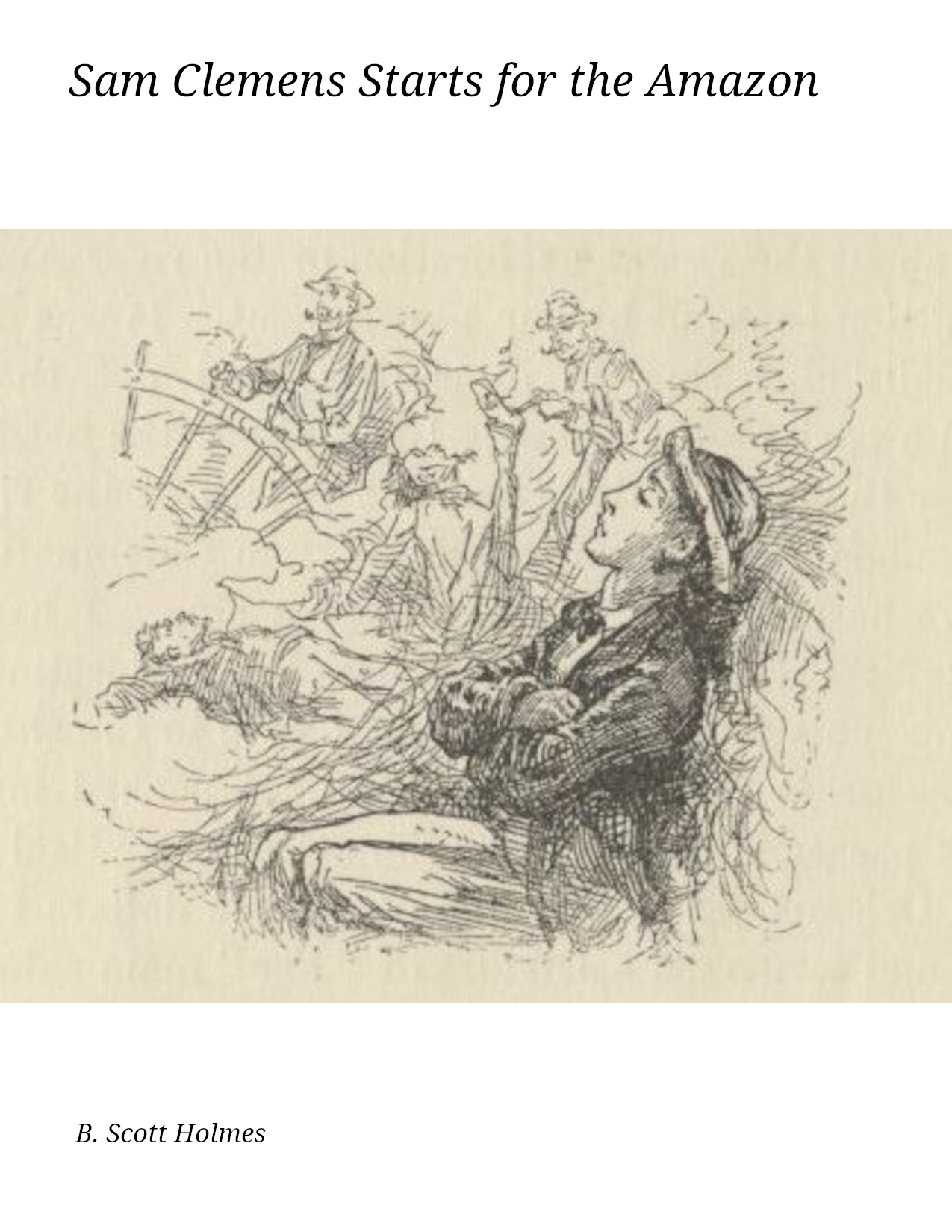
|
One day in the midwinter of 1856 or 1857—I think it was 1856—I was coming along the main street of Keokuk in the middle of the forenoon. It was bitter weather—so bitter that that street was deserted, almost. A light dry snow was blowing here and there on the ground and on the pavement, swirling this way and that way and making all sorts of beautiful figures, but very chilly to look at. The wind blew a piece of paper past me and it lodged against a wall of a house. Something about the look of it attracted my attention and I gathered it in. It was a fifty-dollar bill, the only one I had ever seen, and the largest assemblage of money I had ever seen in one spot. I advertised it in the papers and suffered more than a thousand dollars’ worth of solicitude and fear and distress during the next few days lest the owner should see the advertisement and come and take my fortune away. As many as four days went by without an applicant; then I could endure this kind of misery no longer. I felt sure that another four could not go by in this safe and secure way. I felt that I must take that money out of danger. So I bought a ticket for Cincinnati and went to that city. |
| Sam Clemens: Cub Pilot on the Mississippi River | 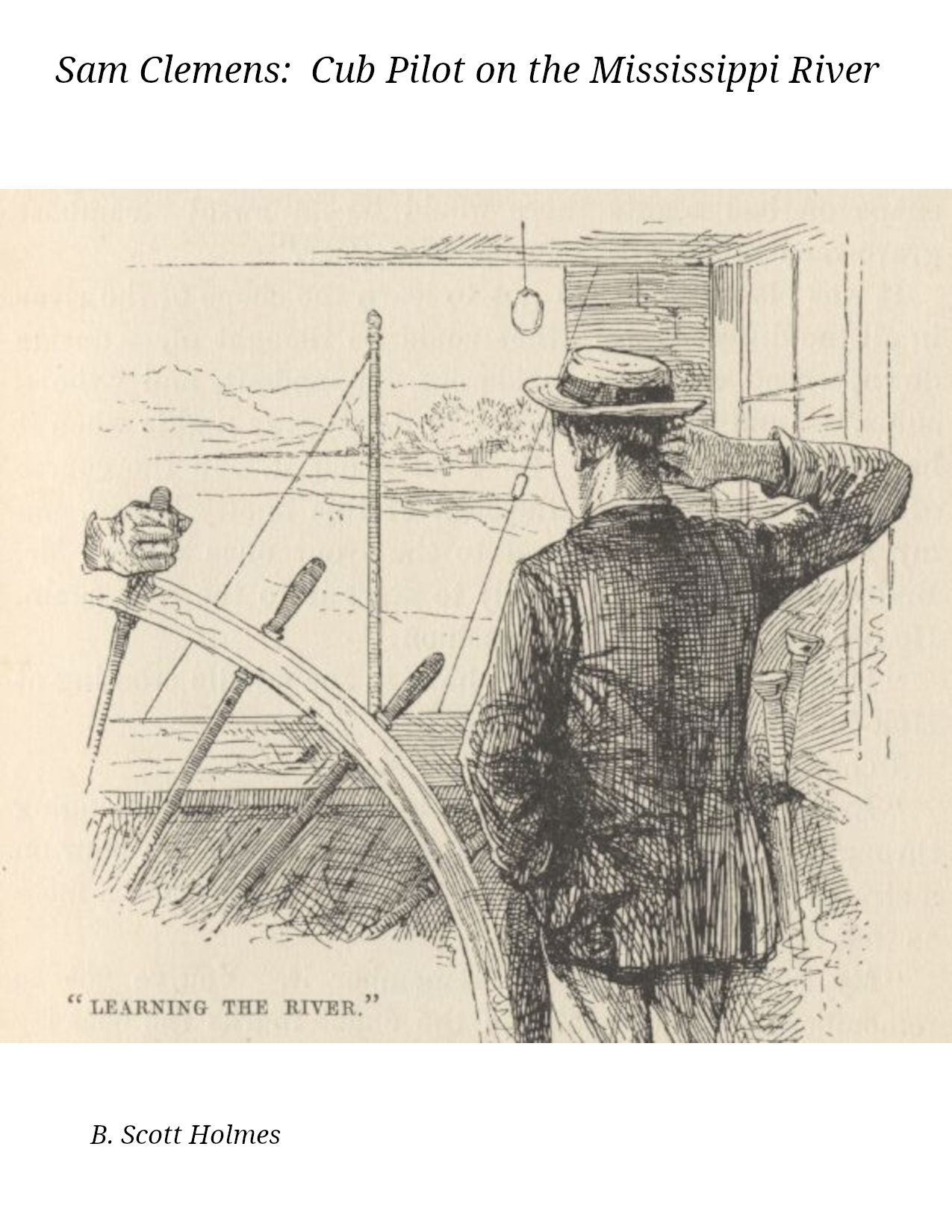
|
I first met him at Cincinnati in the spring of 1857 as a passenger on the steamer Paul Jones. He was on his way to Central America for his health. I got acquainted with him on the trip and he thought he would like to be a pilot and asked me on what conditions he could become my assistant. I told him that I did not want any assistant, as they were generally more in the way than anything else, and that the only way I would accept him would be for a money consideration. I told him that I would instruct him till he became a competent pilot for $500. We made terms and he was with me two years, until he got his license. |
© 2026 B Scott Holmes, All rights reserved.