A day hike, circa '75, of the Kuna Crest, Yosemite National Park. The little blue flag marks the spot where the photo of myself, on the Kuna Glacier crevasse, was taken (see my home page). Click on the Traverse Pages to follow the trail. This set of pages consists of twelve (12) sections - pages that contain an image map with clickable icons. Each icon links to a page with a photograph I took on the hike as well as an Google Earth Image of the approximate location of where the photo was taken.
This is the first test of a slide scanner I just purchased, the jumbl digital film scanner/converter. I was most concerned about being able to download the images from it's internal memory onto my Ubuntu computer. All the documentation talks about is Windows and Apples. But, following the same directions it has for connecting to Windows the unit mounted onto my file system and I simple copied the scanned jpeg image and loaded it into Gimp. This particular image comes from sometime in the early '70's. I no longer have the date but I can still recognize the location.
Twain begins this chapter by proclaiming the virtues of the New Zealand Railways, the Ballarat Flyer in particular. The Ballarat Flyer, however, seems to be a fictitious railroad. His 50 mile journey from Palmerston North to Whanganui was aboard "The Napier Express", which ran from Napier to Wellington, and not all of this line was as pleasant as the leg to Whanganui.
The War Memorial at Whanganui:
https://nzhistory.govt.nz/media/photo/moutoa-gardens-nz-wars-memorial
A study in Scarlet is Sir Arthur Conan Doyle's first Sherlock Holmes adventure, a novel wherein much of the action takes place in the American West. We are first introduced to John H. Watson, M.D., Late of the Army Medical Department. Seeking a roommate, he is introduced to Sherlock Holmes. The second chapter is an introduction to Holmes's Science of Deduction. Sherlock is invited to the scene of the crime in the third chapter by Scotland Yard detective Tobias Gregson, Lestrade is also present at the scene of the crime.
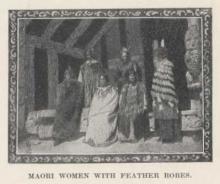
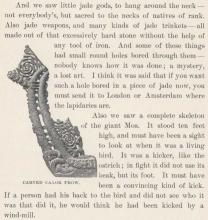
Twain is in Christchurch, New Zealand. He learns of Maori migration legends and their artistry and puzzles over the extinction of the moa. Woman had achieved the right to vote just two years prior and he ponders their superiority over men. The American edition of his book includes a scathing expose' on the Union company that owned the ship, the Flora - a cattle scow, on which he sailed from Lyttleton to Wellington.
Mark Twain takes the train from Timaru to Oamaru, in New Zealand. He is impressed. “They are not English, and not American; they are the Swiss combination of the two. A narrow and railed porch along the side, where a person can walk up and down. A lavatory in each car. This is progress; this is nineteenth-century spirit.” This leads him into a satire on his train ride from Maryborough and the hotel in Maryborough. “The government chooses to do its railway business in its own way, and it doesn't know as much about it as the French.
This chapter touches several interesting points. The Clemens group takes ship from Tasmania to New Zealand, landing in Bluff. Twain notes that Bluff is the same distance south of the equator as Quebec is north, about 47 degrees, yet he is perplexed at the great difference in climate between the two places. Twain then comments on the rabbit infestation of New Zealand. Rabbits were first introduced for commercial purposes but it soon became apparent that they were/are destructive to the native habitat.
Subscribe to
© 2026 B Scott Holmes, All rights reserved.